
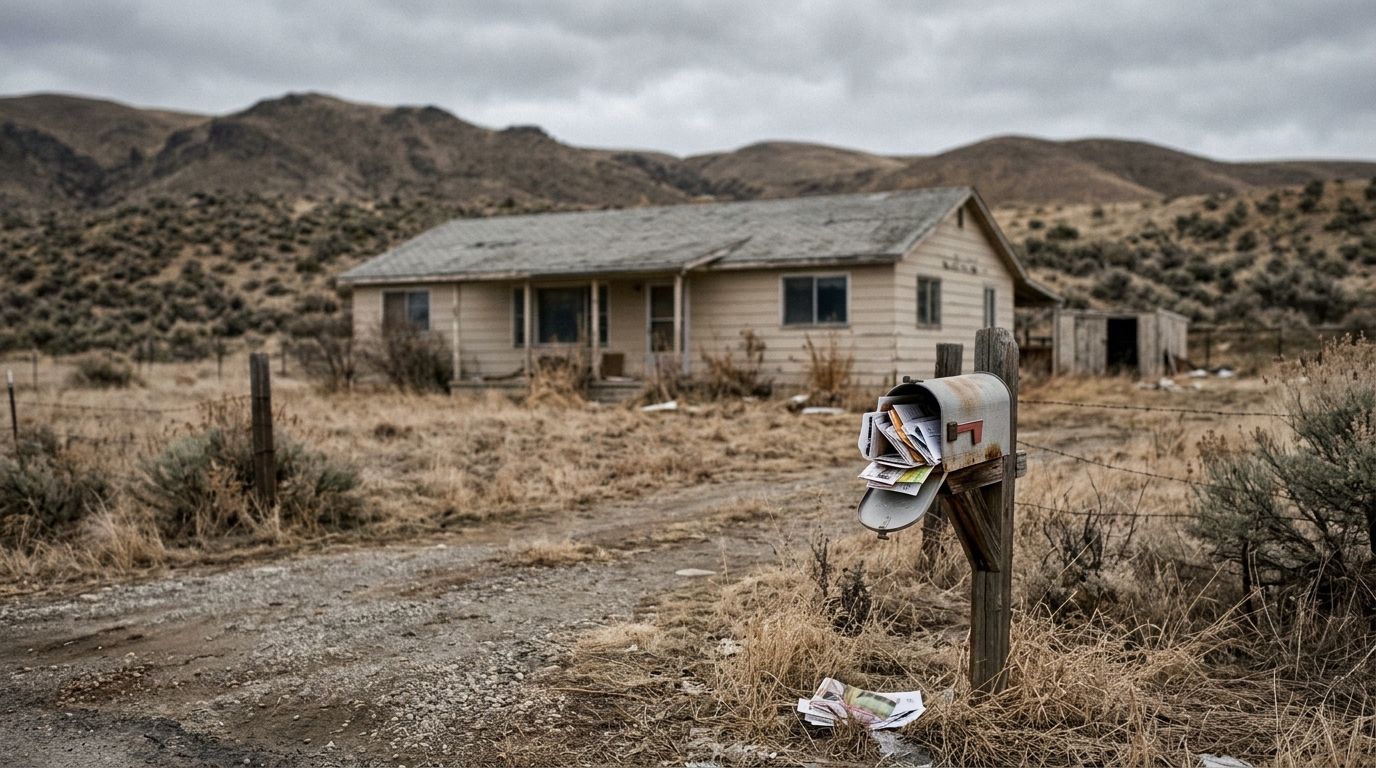
Selling a Vacant or Abandoned House in Idaho: What Keeps Costing You While It Sits
A vacant house in Idaho keeps billing you every month you do not act on it. Property taxes, insurance, utilities, lawn maintenance, and in many Boise-area subdivisions, HOA dues, all continue regardless of whether anyone is living there. Most homeowners in this situation undercount the cost by at least half because they forget the one Idaho-specific hit that lands the day they move out: the homeowner’s exemption disappears.
The Homeowner’s Exemption You Lose the Moment You Move Out
Idaho’s homeowner’s exemption reduces your property’s assessed value by up to $125,000, or 50 percent of assessed value, whichever is less, as long as the home is your primary residence. On a $350,000 Boise house assessed at full value, that exemption shaves roughly $1,500 a year off your property tax bill. On the day you vacate and stop occupying it as your primary residence, it goes away.
You also have to notify the Ada County Assessor or your county assessor’s office by April 15 of the tax year to receive or retain the exemption. Sellers who moved out mid-year and forgot to file, or who did not realize the exemption requires attention after a change in occupancy, often find a larger tax bill than they expected the following spring.
The practical result: for a $350,000 home in the Treasure Valley, losing the exemption typically adds $100 to $150 a month to your holding cost from taxes alone. That is before the insurance situation.
What Your Insurance Policy Says About Vacancy
Standard Idaho homeowner’s policies typically contain a vacancy clause. After 30 to 60 days of vacancy, depending on the insurer and policy, coverage either reduces significantly or voids entirely for losses that occur while the property is unoccupied. Fire, vandalism, and burst pipes are the categories that matter most, because those are the claims that happen in vacant houses.
The Treasure Valley averages overnight lows in the single digits during January, and the Boise foothills can see below-zero stretches. An unheated vacant house in those conditions will freeze its water lines. A burst pipe in an occupied house gets caught quickly. In a vacant house, it can go unnoticed for days or weeks, and by then the drywall, subfloor, and insulation are a remediation job. If your policy had voided for vacancy, that claim is yours alone.
A vacancy endorsement or a dedicated vacant-home policy costs roughly 1.5 to 2 times the premium of a standard homeowner’s policy and covers less. It is the right move if you need to hold the property, but it adds to the monthly cost of doing nothing.
Ada County and Canyon County Code Enforcement
Both Ada County and Canyon County operate active code enforcement programs. In unincorporated Ada County, the Ada County Sheriff handles code enforcement and can open a case on a property for overgrown vegetation, accumulated debris, or structural issues visible from the public right-of-way. The City of Boise has its own nuisance ordinance that follows a notice-to-comply sequence, and the process can end with the city abating the violation and attaching the cost as a lien on the property.
A vacant house tends to accumulate these issues. Grass grows because no one is mowing. A gutter pulls loose because no one is watching. Neighbors notice and complaints get filed. Code enforcement does not move fast in most Idaho jurisdictions, but it moves, and a lien on the title has to be cleared before you can close any sale.
Canyon County, which covers Nampa and Caldwell, runs a similar framework through its planning and zoning office. If the property is inside a city within Canyon County, the city’s code enforcement applies instead.

The Carrying Cost Math on a Vacant Treasure Valley House
The table below uses a $350,000 house in the Boise metro as the example. It is a median-range home, not an edge case.
| Cost Item | Monthly Estimate | Notes |
|---|---|---|
| Property taxes (no exemption) | $300 to $380 | Based on a 1.3% effective rate; varies by county and levy district |
| Vacant-home insurance | $175 to $275 | Standard policy voids at 30 to 60 days vacancy; endorsement or separate policy required |
| Utilities (minimum to prevent freeze damage) | $60 to $100 | Idaho Power and Intermountain Gas; enough to keep pipes from freezing |
| Lawn and exterior maintenance | $75 to $150 | Code enforcement risk if skipped; HOA may fine separately |
| HOA dues (where applicable) | $0 to $400 | Many Treasure Valley subdivisions; dues continue regardless of occupancy |
| Total range | $610 to $1,305 | Per month, before any mortgage payment |
An 8-month hold at the midpoint of that range runs about $7,600, and that is before any unexpected repair. A pipe-freeze remediation in a Boise home typically runs $4,000 to $15,000 depending on how long the water ran before anyone caught it.
What Adverse Possession Means in Idaho
Idaho Code 5-210 sets a 20-year continuous occupation period for an adverse possession claim to succeed. That is long enough that it is not a practical concern for most vacant property owners in the near term. The state does not have a short-track provision that allows someone to claim your property in a few years by paying the taxes.
What matters on a shorter timeline is not adverse possession. It is that an unoccupied property invites unauthorized entry. In rural Idaho counties, a vacant outbuilding or farmhouse can attract squatters faster than the 20-year clock implies. Squatters with established utility usage or mail delivery can complicate a title and a closing. The preventive measure is the same in either case: sell the property or formally secure it.
If the property is in another person’s name, or the original owner has died without the title being transferred, that is a different problem involving probate or quiet title action. Our post on selling an inherited house in Idaho covers the probate side of that situation.

Why Cash Buyers Handle Vacant Properties Differently
A vacant house creates specific problems for a traditional sale. Buyers using mortgage financing need a lender appraisal, and lenders get cautious about properties showing deferred maintenance or code issues. A vacant house with peeling exterior paint, a failed furnace, or a bathroom that needs work tends to appraise conservatively, which shrinks what a financed buyer can offer. If the appraisal comes in low, the deal either falls apart or you take a price cut you did not plan for.
A cash buyer skips the appraisal entirely. There is no underwriting file, no appraiser walking the property with a checklist, no lender condition that has to be satisfied. We look at the house, account for its condition, and give you a number. If it works, we close in 7 to 14 days. If the house needs the kind of repair that would make a financed sale difficult, that does not change the process.
For a vacant house specifically, the speed matters. Every extra week it sits is another $150 to $300 in holding cost, another week of winter freeze risk, another week on the code enforcement timeline. Closing fast does not just get you paid; it stops the bleed.
We buy vacant houses in Nampa, Caldwell, Meridian, Twin Falls, and across Idaho. Call us at (208) 418-0702 or request a cash offer at get-a-cash-offer.
Who Should Not Sell for Cash
A cash offer on a vacant Idaho house will almost always come in below what a clean, occupied, well-maintained home would achieve on the retail market. That discount is the trade for certainty and speed, not a fee we are hiding.
If your vacant house is in a high-demand Boise neighborhood like Warm Springs or the North End, in good structural condition, and you have 3 to 4 months to absorb the holding cost and manage the sale, a traditional listing will likely net you more. An agent experienced with vacant and as-is properties can help you price it to move without sitting.
Retail also makes more sense if the vacancy is recent and short. A house that has been empty for 6 weeks carries a different risk profile than one that has been empty for 8 months. The longer it has sat, the more the math shifts toward the cash option.
Check with an Idaho real estate attorney or tax adviser if you have questions about capital gains treatment, property tax proration at closing, or the homeowner’s exemption recovery timeline. For general context on what sellers pay at an Idaho closing, see our post on what you actually pay at closing in Idaho.
Common Questions
Does a vacant house still qualify for the homeowner’s exemption in Idaho?
No. Idaho’s homeowner’s exemption requires the property to be your primary residence. Once you move out, you no longer meet that requirement. The exemption must be on file by April 15 of the tax year; if you moved out before that date, you lose the exemption for that full year’s tax bill.
What are Idaho’s laws on abandoned property?
Idaho’s unclaimed property law under Title 14 of the Idaho Code governs financial assets, not real estate. For real property, the relevant framework is adverse possession under Idaho Code 5-210, which requires 20 years of open, notorious, hostile, and continuous possession. There is no mechanism for the state or a county to seize a vacant house in the short term, but delinquent property taxes can eventually lead to a tax deed sale through the county treasurer’s office.
How long can a house sit vacant in Boise before code enforcement acts?
It depends on what neighbors observe and whether a complaint is filed. The City of Boise’s nuisance ordinance is largely complaint-driven. A well-maintained vacant house can sit for months without drawing enforcement. An overgrown yard, unsecured entry, or visible debris typically draws a notice within weeks of a complaint. The timeline before the city can abate and lien the property varies by the nature of the violation.
Can I sell a vacant house in Idaho if I live out of state?
Yes. Idaho allows remote closings through a title company, and Idaho Code 51-114A permits remote online notarization, so you can sign documents from another state without traveling to Idaho. Our post on selling Idaho property from out of state covers the withholding and notarization details. A cash sale simplifies this further because there is no bank requiring in-person paperwork from the buyer’s side.