
Selling an Inherited House in Idaho: What Probate Requires and What the Small-Estate Affidavit Actually Covers
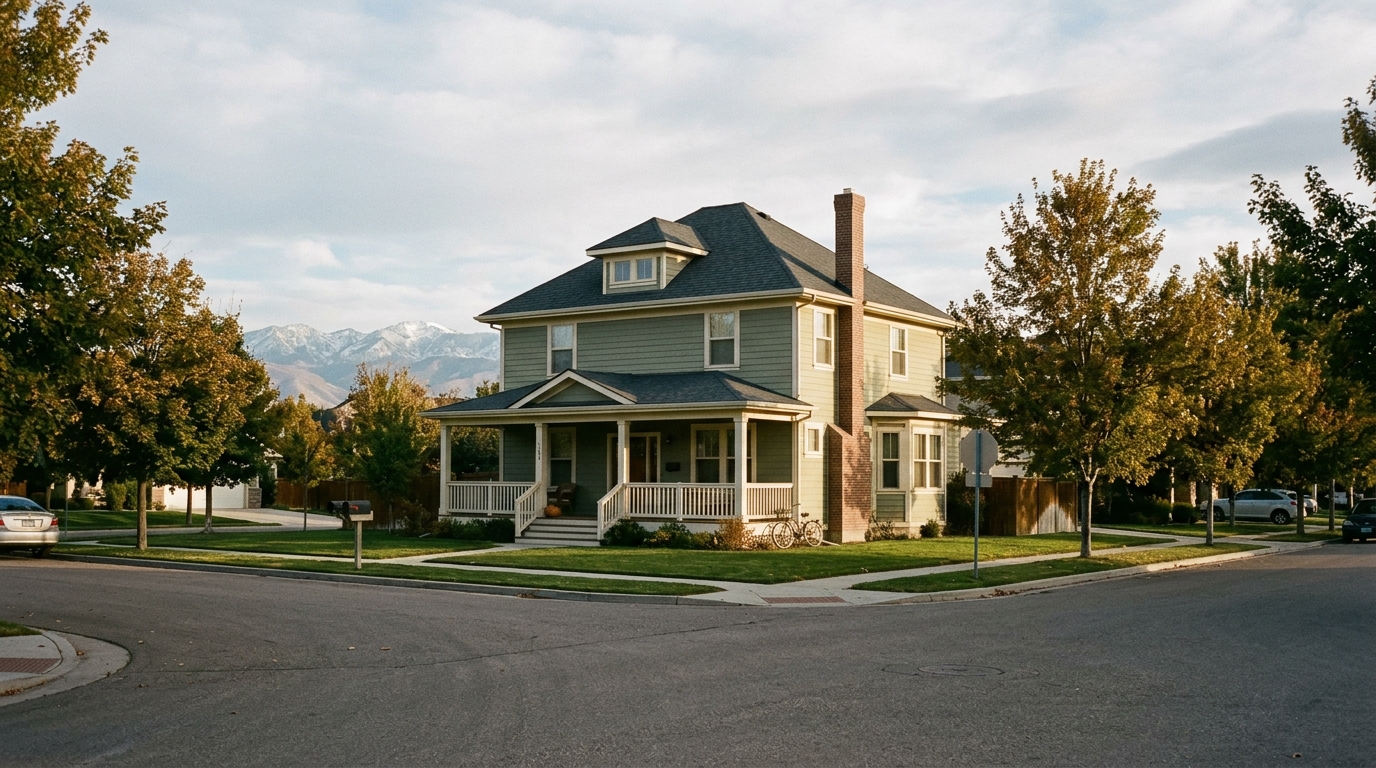
If you inherited a house in Idaho and your first move was to look up the small-estate affidavit, the short answer is: that document will not transfer the house. Idaho’s affidavit procedure covers personal property only. To sell the inherited property, you will go through probate or show that title already passed by another route. Here is what that actually looks like.
What Idaho’s Small-Estate Affidavit Does and Does Not Cover
Idaho Code § 15-3-1201 allows an heir to collect a deceased person’s personal property without opening probate, when the total net value of that personal property does not exceed $100,000. Personal property means bank accounts, vehicles, furniture, equipment, and similar movable assets.
Real estate is excluded. Ada County’s clerk’s office states this directly: the affidavit applies when the decedent “did not own real estate.” Empire Title and Escrow in Boise makes the same point. The affidavit cannot transfer a deed. The $100,000 threshold and the paperwork involved apply only to assets that are not land or a house.
The affidavit is still worth using if the estate includes bank accounts, a vehicle, or other personal property. You can collect those assets relatively quickly while probate proceeds on the real property. It does not speed up the house sale, but it can free up cash while you wait.
When an Inherited Idaho House Can Skip Probate
Three situations allow real property to pass without probate in Idaho:
- Joint tenancy with right of survivorship. If the deed named the decedent and a co-owner as joint tenants, the surviving owner takes the property automatically. You file an affidavit of survivorship along with a certified death certificate at the county recorder’s office. The house is yours to sell without opening probate.
- Community property with right of survivorship. Idaho Code § 15-6-401 allows married couples to hold real estate as community property with right of survivorship. On one spouse’s death, the property transfers to the survivor outside probate. The deed has to reflect this specific ownership form; ordinary community property without the survivorship designation does not have the same effect.
- Revocable living trust. If the decedent deeded the property into a trust, the named successor trustee takes over and can sell it under the terms of the trust without court involvement. The trust document and the recorded deed both need to align for this to work.
Idaho does not have a transfer-on-death deed for real property. A bill to adopt such a law was introduced in the 2026 legislative session but died in committee when the session adjourned. If someone suggests using a TOD deed in Idaho today, that information is out of date.
If the deed does not fit one of the three situations above, you are opening probate.
How Idaho Probate Works on Real Estate
Idaho follows the Uniform Probate Code, codified at Title 15 of Idaho Code. Probate opens in the district court of the county where the decedent lived. The court appoints a personal representative, who takes authority to manage and dispose of estate assets.
Idaho allows both supervised and unsupervised administration. In supervised administration, the court approves major actions including any sale of real property. In unsupervised administration, the personal representative acts without court approval at each step, within the fiduciary duties and notice requirements the statute sets. Most straightforward, uncontested Idaho estates run unsupervised, which removes the need for a separate court order on each transaction.
A typical uncontested Idaho probate runs four to nine months from filing to final distribution. Estates with contested claims, unclear title, or heirs who cannot agree take longer. Ada County (the Fourth Judicial District, which covers Boise and the Treasure Valley) tends to move through probate filings at a predictable pace; rural district courts vary.
Can You Sell the House Before Probate Closes?
Yes. This is where most people assume incorrectly that they have to wait. Probate closing and selling the house are separate events. The personal representative is appointed early in the process, typically within the first few weeks of filing, and that appointment grants authority to manage and sell estate assets.
In unsupervised administration, the personal representative can list and sell the property once appointed. The sale proceeds go into the estate account for later distribution to heirs and creditors. The house does not have to sit vacant and accumulate carrying costs for nine months while other estate matters wind down.
The timing constraint is getting a personal representative appointed with clear authority, not waiting for probate to close. Once that appointment is in place, a sale can move quickly, particularly if the buyer does not need mortgage financing.
What a Cash Sale Changes in an Idaho Probate Sale
Selling a probate house to a financed buyer is workable but adds moving parts the estate does not control. The lender orders an appraisal that must come in on value. Underwriting reviews title given the estate’s status and sometimes flags issues. Closing happens on the lender’s schedule, not the estate’s. Any one of those can delay or kill the deal.
A direct cash buyer removes those variables. No bank appraisal. No underwriting timeline. The closing date fits what the personal representative needs rather than what a lender allows. If the estate needs 30 days to confirm the representative’s authority, we wait. Once the paperwork is in order, we can close in 7 to 14 days.
Sell My House Fast Idaho buys directly and as-is across the state. An inherited house often has deferred maintenance, dated systems, or contents heirs have not yet cleared, particularly when the family lives out of state. None of that changes our offer or the close timeline. If your property is in Meridian, Nampa, Twin Falls, Pocatello, or anywhere else in Idaho, we can make an offer. Call (208) 540-8257 or go to our offer page to start.

Who Should Not Sell an Inherited Idaho House for Cash
A cash offer typically comes in below what a fully marketed retail listing would produce. That is not a defect; it reflects the trade. You give up potential upside in exchange for certainty, speed, and no repairs. For some estates, that trade is right. For others, it is not.
A cash sale probably does not fit your situation if:
- The house is in good condition and sits in a market with strong buyer demand. A financed retail buyer in a competitive Treasure Valley neighborhood can still produce a meaningfully higher net, particularly if heirs can wait four to five months for a traditional listing to close.
- All heirs agree and none need liquidity quickly. Carrying costs, utilities, and taxes add up, but if everyone can wait and the property is in good shape, a listed sale will likely net more.
- The estate is in supervised administration where the court requires a formal appraisal and a competitive bidding process before approving a sale. In those cases, a cash offer’s speed advantage largely disappears under the court’s procedural requirements.
Before committing to any sale strategy, one hour with an Idaho probate attorney tells you which track the estate is on, what a sale requires under the court’s level of supervision, and whether the timeline pressure justifies the discount a cash buyer brings. For an overview of the paperwork involved at closing, this guide covers what Idaho sellers typically see at settlement.
Capital Gains and Closing Costs on an Inherited Idaho Property
Idaho has no state inheritance tax and no state estate tax. For federal tax purposes, inherited real property receives a stepped-up cost basis to the fair market value at the date of death. If you sell the house within a short period of inheriting it, your capital gains exposure is typically small or zero because the sale price and the stepped-up basis sit close together.
Idaho has no real estate transfer tax. At closing you will see title insurance, prorated property taxes, recording fees, and any agreed-upon seller credits. There is no transfer tax line on the settlement statement, which is different from most states.
Verify all tax points with a CPA or Idaho attorney before the sale. Individual circumstances vary and federal rules change.
Common Questions
Does an inherited house have to go through probate in Idaho?
Usually yes, if the house was titled solely in the decedent’s name with no survivorship arrangement. The exceptions are joint tenancy with right of survivorship, community property with right of survivorship under Idaho Code § 15-6-401, and a living trust. Check the recorded deed first at the county recorder’s office. If none of those arrangements are in place, probate is required to transfer clear title to a buyer.
How long does Idaho probate take for a house?
An uncontested estate in unsupervised administration typically runs four to nine months from filing to final distribution. The house itself can often be sold well before probate closes. Once a personal representative is appointed, usually within the first few weeks of filing, they generally have authority to sell. The appointment is the milestone that matters for a sale, not the close of probate.
Can multiple heirs force a sale of an inherited Idaho house?
If heirs cannot agree, any heir can file a partition action in district court, which can result in a court-ordered sale. It is a slower and more expensive path than agreeing together. Getting all heirs aligned on a cash offer at a firm price, one that removes negotiation about repairs or condition, is one practical way to head off a partition filing.
What is Idaho’s small-estate affidavit threshold in 2026?
Under Idaho Code § 15-3-1201, the affidavit procedure applies to personal property with a net value under $100,000. Real estate is not covered and cannot be transferred using the affidavit. If the estate consists only of personal property under that threshold and no real estate, the affidavit lets heirs collect those assets without opening probate at all. The $100,000 figure has not changed for 2026.
If you are working through an inherited Idaho property and want to know what a cash offer would look like, call (208) 540-8257 or start at our offer page. No obligation and no pressure to decide on the spot.