
Selling a Rural Idaho Home With a Failing Roof or Septic System
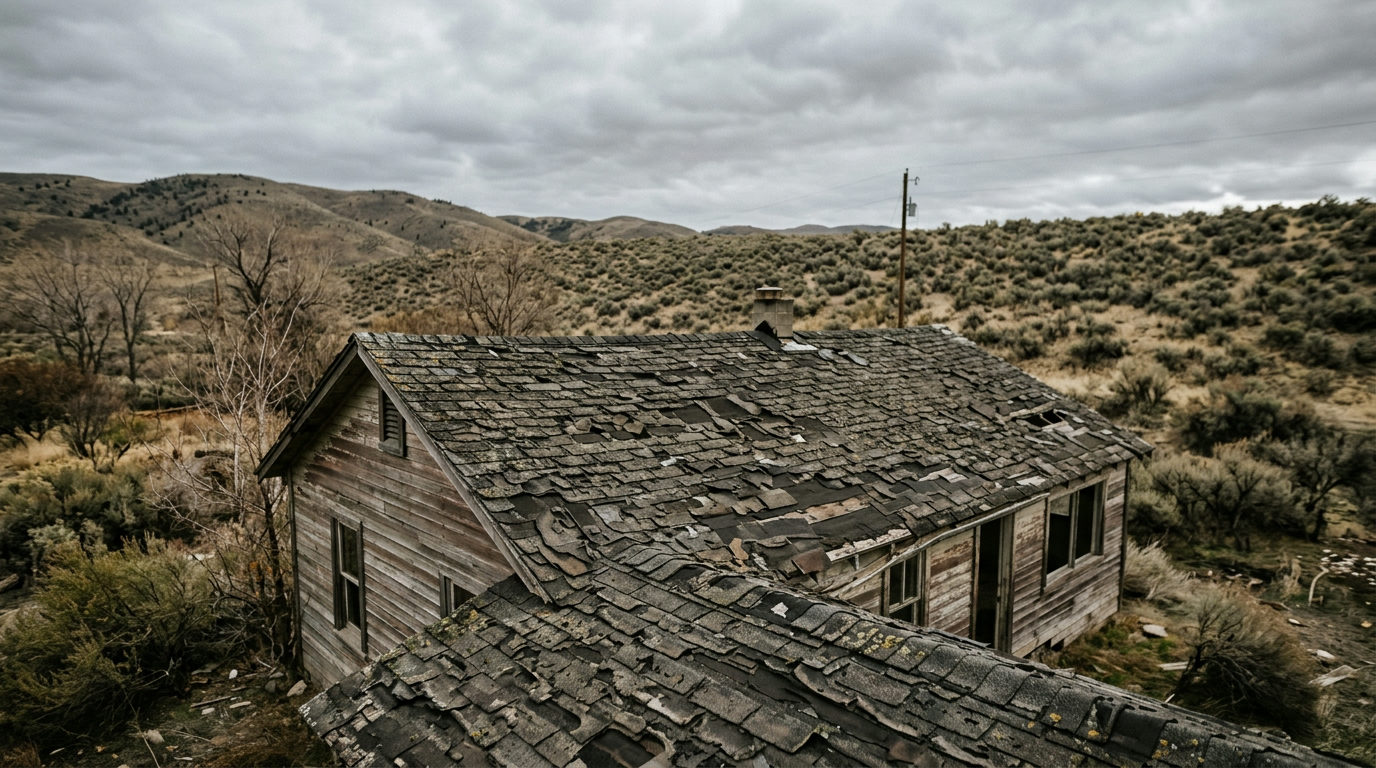
A roof that has reached the end of its life, or a septic system that is backing up or failing a perc test, will cut your buyer pool in rural Idaho to a fraction of its normal size. Most buyers using an FHA, VA, or USDA Rural Development loan cannot close on a property with an active roof leak or a non-functional sewage system. In many rural Idaho counties, those government-backed programs represent the majority of purchase financing. This post covers what your three realistic options are and what each one costs you.
Why a Roof or Septic Failure Blocks Most Rural Idaho Buyers
Outside the Treasure Valley, a large share of Idaho properties run on private wells and septic systems. That is the normal setup in Owyhee County, Elmore County, Twin Falls County, Gooding County, Cassia County, and most of the Snake River Plain. Many of these same counties have lower median household incomes and a higher proportion of buyers financing with government loan programs rather than conventional mortgages.
FHA, VA, and USDA Rural Development loans all require the property to be safe, sound, and sanitary at closing. An appraiser working for one of those lenders will flag an active roof leak or a failed septic system as a required repair before the loan can close. The deal either falls apart, or the seller has to agree to fix the problem before closing, which puts the seller back into contractor and permit territory with money they may not have.
USDA Rural Development loans cover properties in communities under a population threshold and are widely used in Idaho’s rural counties because they require no down payment. If your rural property has a failing septic or a roof that will not pass minimum property standards, you have removed every USDA buyer from consideration before a single showing. For a property near Twin Falls or in one of the surrounding farm counties, that can eliminate a substantial share of the people who would otherwise be interested.
Option 1: Fix It Before You List
For a roof, that means a full tear-off and replacement, or where the decking is still sound, a second-layer overlay. In the Treasure Valley and across southern Idaho, a standard shingle replacement on a 2,000-square-foot single-story house runs roughly $12,000 to $18,000, depending on pitch and how many existing layers have to come off. Metal roofing, more common on rural Idaho properties because of snow load and long-term maintenance, runs higher, often $20,000 to $35,000 for the same footprint. The physical work takes 2 to 5 days, but scheduling in late summer and fall, peak season in Idaho, adds 4 to 8 weeks of wait time before the crew shows up.
For a septic system, the process is slower and more involved. Idaho DEQ regulates individual sewage disposal systems statewide, but permits are issued through your county’s public health district. A site evaluation and perc test typically takes one to two weeks to schedule. Installation of a replacement conventional system in southern Idaho runs $8,000 to $20,000. If your soil or water table is difficult, an engineered system or a mound system adds significant cost and can push the total to $30,000 or more. From deciding to fix it to final inspection sign-off, plan on 60 to 90 days in a busy construction season. That is 60 to 90 days before you can list at full retail price.
Fix-it-first makes financial sense when the property is in a strong retail market, the repair cost is proportionate to the home’s value, and you have the cash to front it. If you are sitting on an Elmore County property worth $190,000 and the septic replacement quote is $24,000, the math is harder.

Option 2: Disclose It, Price It Down, and Offer a Credit
You list the property at a price that reflects the known problem, disclose the defect fully on the seller’s property disclosure form, and either offer a repair credit at closing or price below what the repair will cost so the buyer takes it on. This approach works when you can find a buyer with cash or conventional financing who is willing to absorb the problem.
The practical difficulty is that a buyer willing to take on a major repair wants a discount larger than the repair estimate. They are taking on contractor risk, permit timelines, and the possibility the scope grows once the old material is removed. On a $250,000 rural property, a buyer facing a $15,000 roof replacement and a $20,000 septic job often wants $42,000 to $55,000 off the asking price, not $35,000.
| Scenario | Repair Cost Estimate | Typical Buyer Discount Demand | Rough Net on a $250K Property |
|---|---|---|---|
| Roof replacement (shingle, 2,000 sq ft) | $12,000 to $18,000 | $18,000 to $24,000 | $226K to $232K |
| Septic replacement (conventional soil) | $15,000 to $20,000 | $22,000 to $30,000 | $220K to $228K |
| Both roof and septic | $27,000 to $38,000 | $42,000 to $55,000 | $195K to $208K |
These figures are illustrative ranges based on typical southern Idaho repair costs and buyer negotiation patterns, not guaranteed outcomes. Your specific numbers depend on the property, the condition, and which buyers show up. The discount gap above the repair cost, sometimes called the risk premium buyers add, tends to widen when multiple systems are failing at once because buyers have seen deals fall apart at the reinspection stage.
Option 3: Sell to a Cash Buyer As-Is
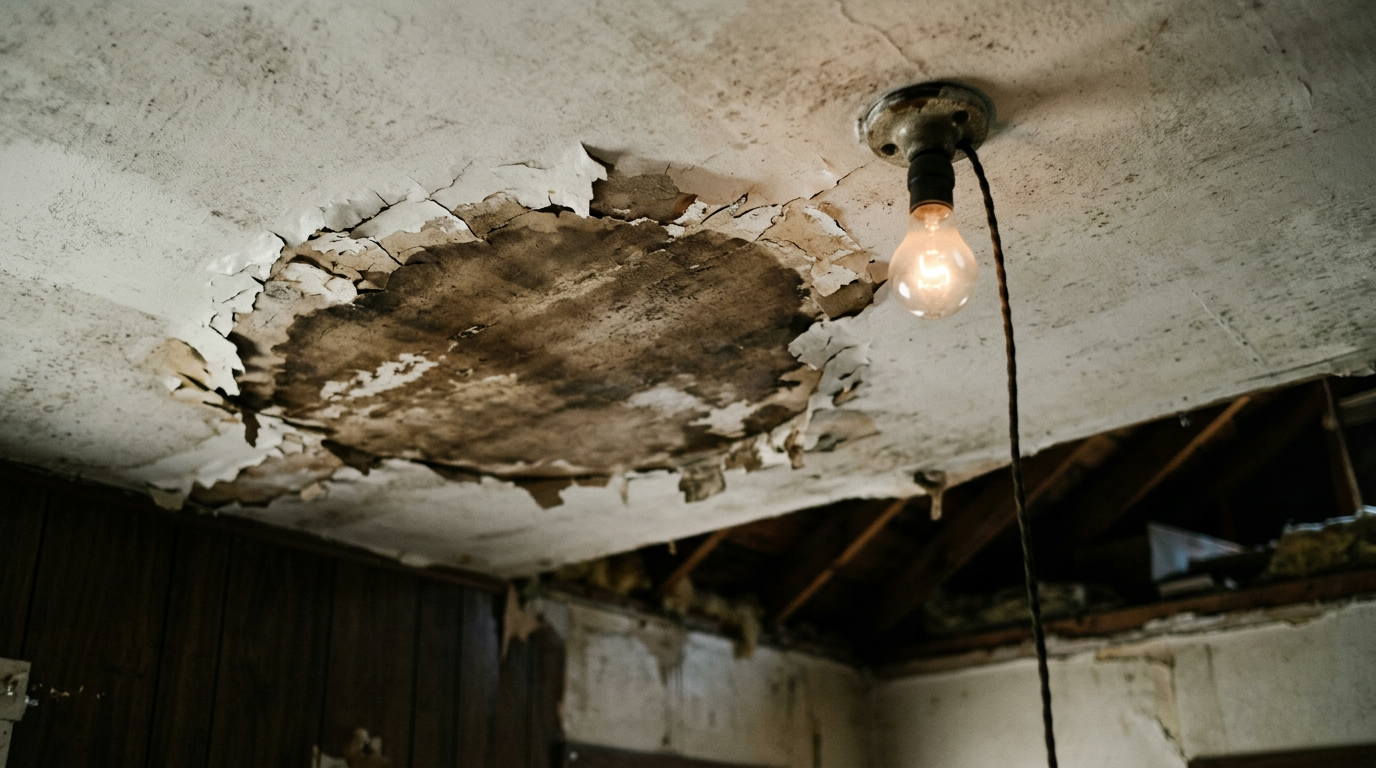
We buy rural Idaho properties in the condition they are in. A failing roof, a septic system that has not been pumped in a decade, or a drainfield that is fully saturated are problems we price into the offer, not reasons to walk away. The reason a cash close works where a retail close does not is that there is no lender requiring an appraisal that will kick the property back for minimum property standards. No contingency period waiting on a government-backed underwriter to approve the condition. No contractor timeline sitting between the seller and the closing table.
We can give you a cash offer within 24 hours of seeing the property. A closing can happen in 7 days or on whatever timeline fits your situation. You pay zero commissions, zero fees, and we cover closing costs. No repairs, no cleaning, no coordinating with county health districts about permit timelines.
The trade-off is real and worth stating plainly. A cash offer comes in below what you would net from a clean retail sale on a fully repaired property. What you are exchanging is certainty and speed for the top end of the market. For a rural Idaho seller dealing with two major system failures and no cash to front repairs, that trade is often the only path that makes practical sense. If you have the time, money, and contractor access to fix both systems before listing, retail may net you more overall.
What Idaho Law Requires You to Disclose
Idaho’s Real Property Disclosure Act (Idaho Code Title 55, Chapter 25) requires sellers to complete a disclosure statement covering known material defects. The type of sewage disposal system serving the property, and any known problems with it, must be disclosed. Known roof defects, including active leaks, water intrusion, and known age-related deterioration, must also be disclosed.
Selling as-is does not eliminate the disclosure obligation. You are not required to repair anything, but you are required to tell buyers about material defects you know about. Failure to disclose a known material defect can expose you to a legal claim after closing regardless of what the contract says about the condition of the property. If you have unpermitted repairs on top of the condition issues, those have their own disclosure requirements under Idaho Code 55-2508. For specific questions about your situation, talk to an Idaho real estate attorney before signing anything.
If you want to understand how unpermitted repairs intersect with a sale, the post on unpermitted work and code violations in Ada and Canyon County covers the Idaho disclosure obligations in more detail.
When a Cash Sale Is Not the Right Answer
If the property is in a market where retail buyer demand is strong enough that a disclosed-and-discounted listing would draw multiple cash or conventional offers, skipping the retail process may cost you real money. Strong demand exists in parts of the Treasure Valley even for properties with disclosed defects, particularly if the lot size or location is desirable.
If you have the cash to front repairs and contractor availability to complete them within a reasonable timeframe before the selling season ends, fix-it-first often nets you more. A clean property with a new roof and a permitted septic replacement commands full retail, and buyers using government-backed loans come back into your pool.
A cash offer also comes in below retail by definition. If your primary goal is the absolute highest sale price and you have 3 to 6 months to manage the process, direct cash sales are not the right route.
Common Questions
Can I sell a rural Idaho house with a failed septic system without fixing it first?
Yes. Idaho does not prohibit the sale of a property with a non-functional septic system. You must disclose the condition on the seller’s disclosure form under Idaho’s Real Property Disclosure Act. The practical problem is not legal, it is financial: most buyers using FHA, VA, or USDA Rural Development financing cannot get loan approval on a property with a failed sewage system, which limits you to cash buyers and some conventional borrowers willing to absorb the repair post-closing.
Does a leaking roof reduce the selling price by more than the repair cost?
In most rural Idaho transactions, yes. Buyers who take on a known roof problem want a discount that covers the repair estimate plus the uncertainty of what the contractor finds once the old material comes off. A $14,000 roof replacement quote routinely turns into a $18,000 to $22,000 price reduction in negotiations. The gap is wider when there is also visible interior water damage, because buyers factor in the possibility of mold remediation or structural repair that was not yet visible on the disclosure form.
Who pays for the septic inspection when selling a rural Idaho property?
In most Idaho transactions, the buyer orders and pays for the septic inspection as part of due diligence during the inspection contingency period. Some sellers commission a pre-listing inspection so there are no surprises once the property is under contract. If you are selling as-is to a cash buyer, there may be no formal septic inspection required at all, as the buyer is accepting the property in its current stated condition.
How long does replacing a septic system in rural Idaho typically take?
From first call to final permit sign-off, plan 6 to 12 weeks in peak season. The permit process runs through your county’s public health district, which must schedule a site evaluation and perc test before any installation permit is issued. Idaho DEQ requires this through the public health district structure, so there is no way to shortcut the scheduling. In rural counties with fewer licensed installers, contractor availability alone can add 4 to 6 weeks to the front end of that timeline.
If your rural Idaho property has a roof or septic problem and you want a cash offer without the contractor and permit timeline, call us at (208) 540-8257 or visit our offer page. We work with sellers across southern and central Idaho and can typically give you a number the same day we see the property.