

Unpermitted Work and Code Violations in Ada and Canyon County: What Idaho Sellers Need to Know
A code violation notice and an unpermitted addition are two different problems, and sellers in Ada and Canyon counties routinely confuse them. The distinction matters because one triggers a government timeline and the other sits quietly in the property record until a buyer’s inspector or lender finds it. Both can derail a traditional sale, and neither requires repairs before you can sell. For general context on how Idaho sellers handle property sold as-is, this earlier post on code violations in Idaho covers the basics.
The Difference Between a Code Violation and Unpermitted Work
A code violation is an active notice from a government authority: Ada County’s Sheriff’s code enforcement unit, the City of Boise’s planning department, the City of Nampa’s code compliance office, or a similar body. Someone filed a complaint or an inspector observed the problem. There is a record, a case number, and often a deadline to correct it.
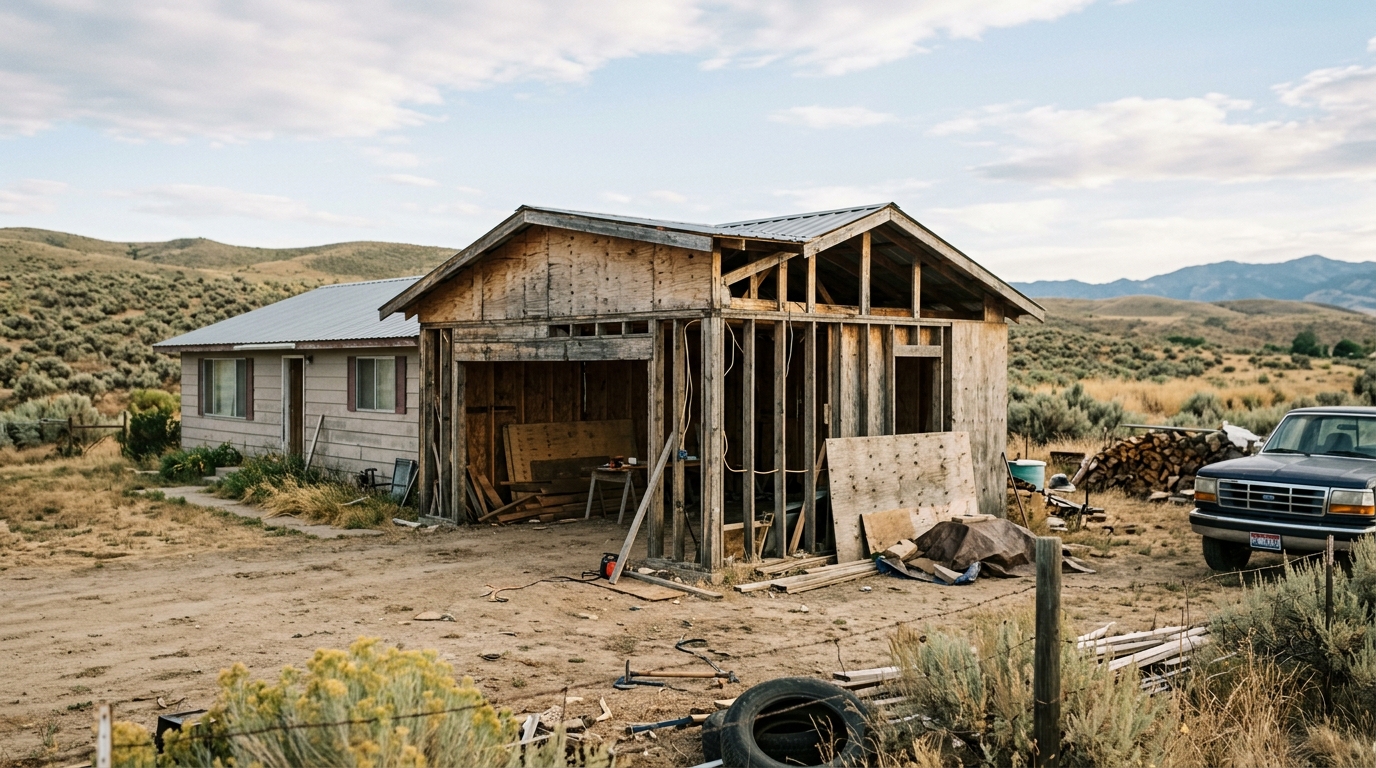
Unpermitted work is quieter. A garage conversion, a basement bedroom, a deck addition. The work was done and no permit was pulled. The county records show nothing wrong. But a good home inspector will flag it, and a lender’s appraiser will note that the property’s permitted square footage does not match what they see. That discrepancy can end a financed sale even though the local government has never issued a notice.
How Code Enforcement Works in Ada County
Ada County operates two enforcement systems layered on top of each other. The Ada County Sheriff’s Office runs a code enforcement unit for the unincorporated parts of the county: areas outside Boise, Meridian, Eagle, Garden City, and Star city limits. That unit investigates complaints about land use and building issues, issues notices of violation, and sets correction timelines.
Inside city limits, each city runs its own department. Boise has a planning and development services office. Meridian routes building and code issues through its development services division. Eagle and Garden City each have separate code enforcement staff. If your property carries a Boise zip code but the municipality that issued the violation was Ada County, the property sits in an unincorporated pocket, and the Sheriff’s unit is the one you need to contact, not the city.
Violation resolution typically follows a pattern: written notice, a correction period specific to the type of violation, a reinspection, then civil penalties if the problem is not fixed. Those penalties can become liens recorded against the property.
How Code Enforcement Works in Canyon County
Canyon County follows the same structure. The county’s planning and zoning department handles unincorporated areas, which includes much of the agricultural and rural land surrounding Nampa and Caldwell. Inside city limits, Nampa and Caldwell each run their own code compliance operations.
Canyon County has seen substantial residential growth in unincorporated areas over the past decade. Outbuildings, shop additions, and secondary structures that went up without permits are common, particularly on older rural properties that sat outside any city’s inspection reach for years. Those structures are rarely flagged by code enforcement but come up consistently in buyer inspections and lender appraisals.
What Idaho Law Requires You to Disclose
Idaho Code 55-2508 prescribes the state’s standard Property Condition Disclosure form. Two items apply directly to violations and permits.
Item 6 requires disclosure of conditions that may affect your ability to clear title, including zoning violations. If there is an active code violation that has generated a lien or a formal enforcement notice, it belongs here.
Item 8 asks specifically: “Have any substantial additions or alterations been made without a building permit?” This is not a judgment call. If someone added a bedroom, finished the basement, converted the garage, or expanded the home’s footprint without pulling a permit, you check yes on Item 8 of the Idaho state disclosure form. Leaving it blank when you know unpermitted work exists exposes you to claims after closing.
Disclosure does not resolve the underlying problem. It informs the buyer, who then decides how to proceed. A financed buyer’s lender may still decline the property even with full disclosure. Consult an Idaho attorney if you have questions about your specific disclosure obligations.

What Happens to Active Violations at Closing
An active code violation that has become a lien will show on a title search. The title company handling your closing will require it to be resolved before issuing a clean title policy. That means either paying to bring the property into compliance before closing, negotiating a credit to the buyer to handle it afterward, or holding funds in escrow until the work is completed.
Getting a code violation resolved in Ada or Canyon County depends on the type of violation and the department’s current workload. Simple violations, like a fence above the local height limit, can close in weeks. Structural violations, unpermitted room additions, or properties flagged for habitability issues take longer. Permitting work after the fact requires inspection of the work as built, corrections to bring it to current code, and fees. In Boise and Nampa, that process can run several months.
If you are on a timeline because of a job relocation, a financial situation, or another constraint that cannot wait for a permit process to resolve, that timeline shapes your options more than the violation itself does.
Why Conventional Buyers Often Cannot Close on These Properties
Lenders underwriting conventional mortgages, FHA loans, or VA loans will not fund a property with open code violations. The appraiser notes it. The underwriter flags it. The file stalls until the condition clears. In some cases, the buyer walks rather than wait.
Unpermitted work creates a parallel problem. A lender’s appraisal is based on permitted, legally habitable square footage. If the inspector’s report shows that several hundred square feet of the home are unpermitted, the appraisal may not support the agreed purchase price, and the buyer’s loan-to-value ratio shifts. Deals fall apart in final underwriting over this, sometimes weeks after a contract is signed.
What Selling As-Is for Cash Actually Means Here
A cash buyer has no lender. There is no underwriter reviewing the file, no appraisal condition tied to permitted square footage, and no requirement to resolve a code violation before the funds arrive. The offer is based on the property’s condition as it stands.
We buy houses in Ada and Canyon County as-is, including properties with active violations, unpermitted additions, or code issues the owner does not want to address before selling. We handle the resolution process after closing. The offer reflects the cost to do that, which is why the number comes in below a retail sale of a fully compliant property. There is no point in pretending otherwise.
A cash sale still involves title work. The title company identifies any recorded liens, and those liens get accounted for at closing, either paid from proceeds or factored into the purchase price. What a cash sale removes is the lender constraint, not the title search.
Sellers in Nampa, Caldwell, Kuna, and the rural stretches of Ada and Canyon County deal with these situations regularly. Call (208) 540-8257 or use the form at get a cash offer to find out what we would pay, with no obligation to proceed.
Who Should Not Sell for Cash
A cash offer will net less than a clean retail sale on a compliant, well-maintained property. If your code violation is minor, the correction cost is manageable, and you have time to work through a permit process, a listed retail sale is likely the better financial outcome. The commission and carrying costs will be less than the discount a cash buyer needs to take on the risk and the remediation work.
If a retroactive permit application is straightforward, the violation is low-stakes, and the local department has a short processing window, calculating the fix-then-list option is worth doing before you decide anything. Get a contractor estimate and call the relevant department for a realistic timeline before assuming the as-is route is your only path.
A cash sale makes more sense when the violation is structural or complex, the correction timeline is measured in months, a financed buyer has already walked from a contract, the property has multiple unpermitted elements that would require significant work to bring to current code, or you need to close on a date that the permit process cannot match.
Common Questions
Does an unpermitted addition have to be torn down?
Not automatically, but it is possible. In Ada County and Canyon County, after-the-fact permits require the work to be inspected as built. If it cannot meet current code, the building department may require corrections or, in cases where correction is not feasible, removal. The outcome depends on the type of work and how far out of compliance it is. A cash buyer who takes the property as-is absorbs that risk after closing.
Can a code violation in Boise or Nampa follow the seller after closing?
Once you convey title, the obligation for a property-attached code violation generally transfers with the property. However, if a violation generated a personal civil judgment rather than just a property lien, that does not automatically clear at sale. This is a fact-specific question for an Idaho attorney, not a generalized answer a blog post can reliably give.
Does the Idaho disclosure form exempt estate or foreclosure sales?
Yes. Idaho Code 55-2505 lists several exemptions from the Property Condition Disclosure requirements, including transfers from certain decedents’ estates, court-ordered transfers, and acquisitions through foreclosure. A standard arm’s-length sale between private parties is not exempt. If you inherited a property and are selling as the estate’s representative, confirm your specific obligations with an attorney before closing.
How do I find out if a property has open Ada County or Canyon County violations?
For unincorporated Ada County, the Sheriff’s code enforcement unit maintains active case records. Their office is listed at adacounty.id.gov/sheriff/services/code-enforcement. For properties inside Boise, Meridian, or Eagle city limits, each city’s development services department keeps its own records. Canyon County planning and zoning handles unincorporated Canyon County cases. A title search at closing will also surface any recorded liens from unresolved enforcement actions.