
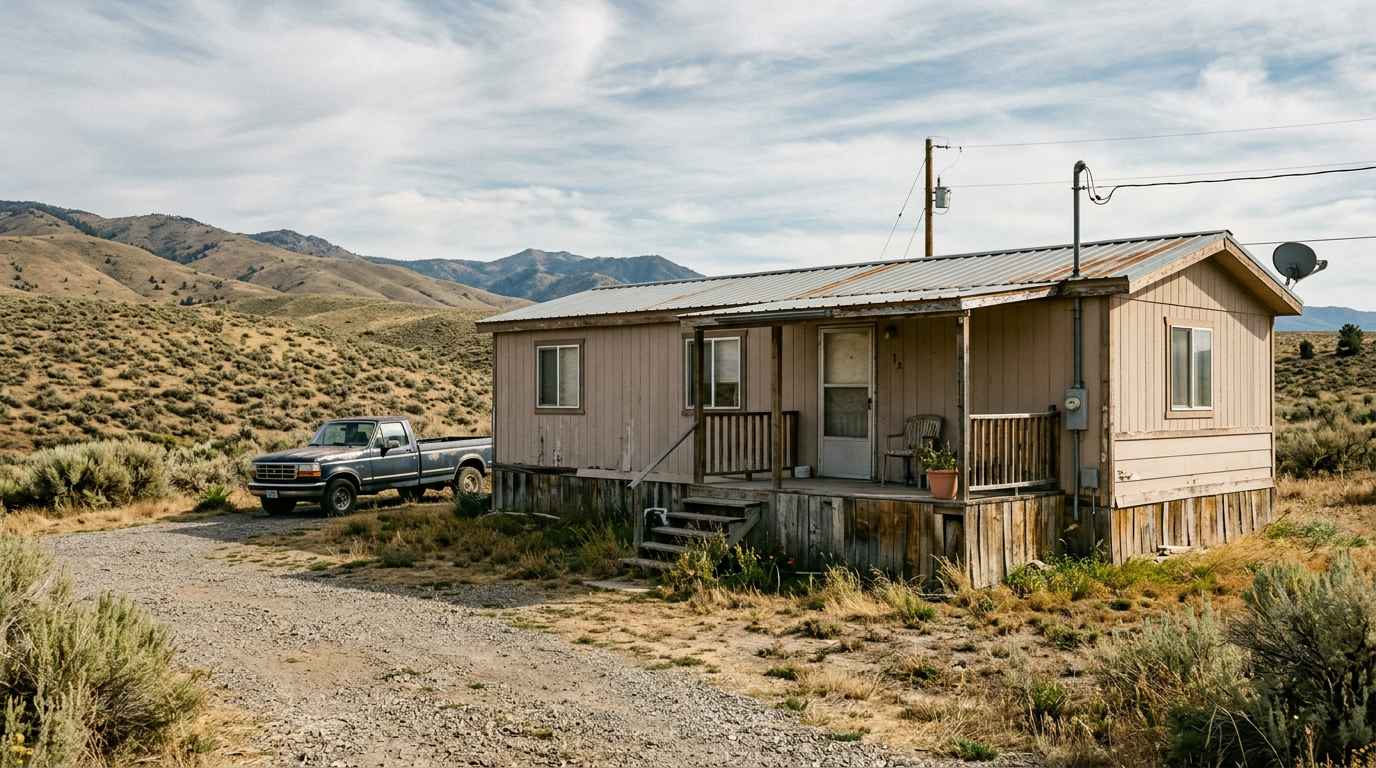
Selling a Manufactured Home in Idaho: The Title Problem That Shrinks Your Buyer Pool
If you own a manufactured home in Idaho and want to sell, you are dealing with a buyer pool that is smaller than you might expect. Conventional lenders reject manufactured home loan applications at a far higher rate than site-built homes, for reasons tied to the home’s age, title classification, and foundation. A cash buyer sidesteps those requirements entirely, which changes the math on your options.
Personal Property or Real Property: Why Idaho’s Classification Changes Everything
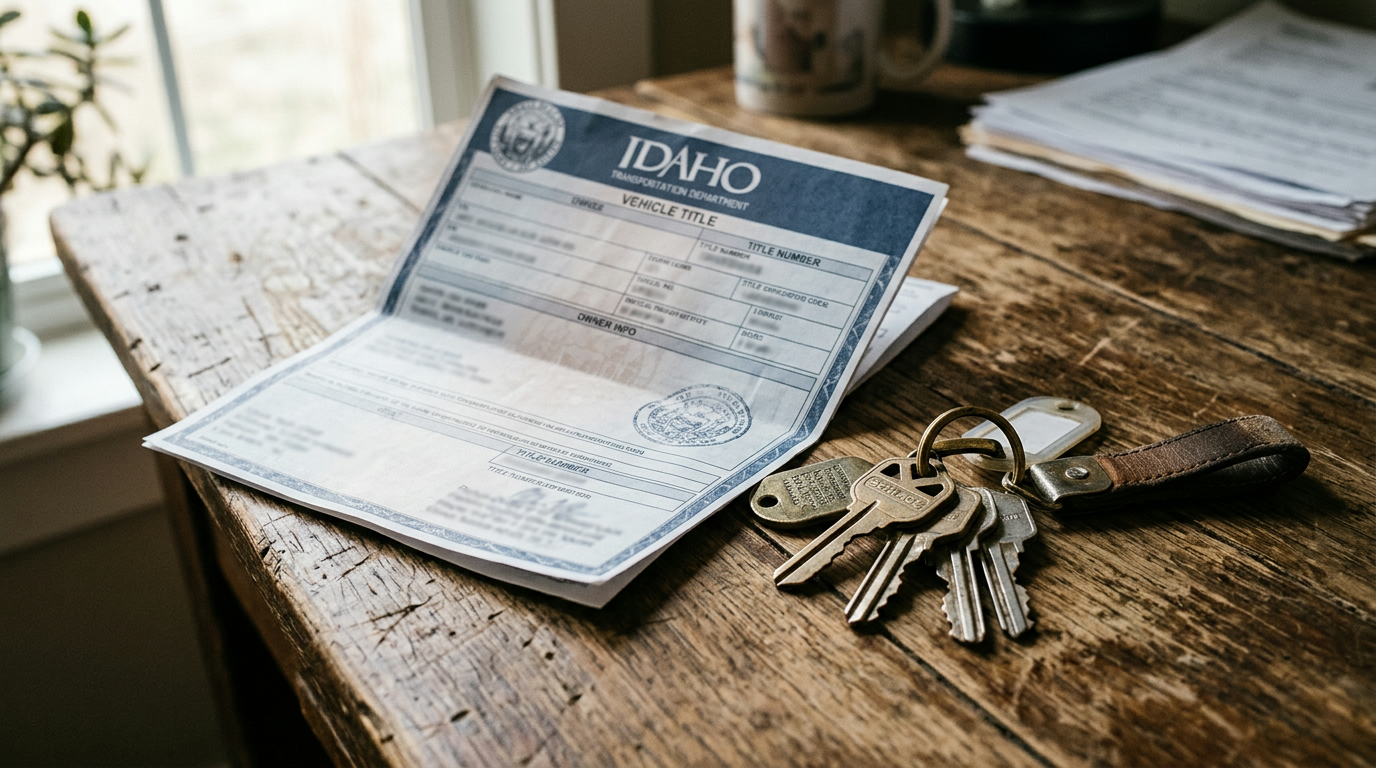
Idaho Code Title 63 splits manufactured homes into two categories: personal property and real property. The default is personal property, which means the home gets its own certificate of title from the Idaho Transportation Department, the same way a vehicle does.
A manufactured home becomes real property when the owner records a Statement of Intent with the county recorder (Idaho Code 63-304). Three conditions must be met: the running gear (wheels, axles, hitch) must be removed; the home must be permanently affixed to a foundation on owned or leased land; and the Statement of Intent must be on file. Once that record is in place, the county assessor coordinates with the Idaho Transportation Department to cancel the personal property title, and the home and land are assessed together on the property tax rolls.
Why does this matter when you sell? Because lenders care intensely about which category your home falls into. A home still titled as personal property cannot qualify for a conventional mortgage, an FHA loan, a VA loan, or a USDA loan in most cases, regardless of its condition or value. Your buyer’s financing options narrow to chattel loans, which carry higher rates, shorter terms, and larger down payments than site-built home mortgages. That restriction alone eliminates a large portion of buyers who otherwise might have made an offer.
The Lender Checklist That Eliminates Most Idaho Buyers
Fannie Mae, FHA, VA, and USDA all require a manufactured home to clear the same set of standards before a conventional loan closes. The requirements are specific, and failing any single one ends the application:
- Built on or after June 15, 1976 (the effective date of HUD’s Manufactured Home Construction and Safety Standards)
- The original HUD certification label, called the red tag, still attached to the exterior of each section
- At least 400 square feet of floor area
- At least 12 feet wide
- Running gear removed and the home no longer roadworthy
- Permanently affixed to a foundation meeting the HUD Permanent Foundations Guide
- Classified and taxed as real property in Idaho (Statement of Intent filed with the county recorder)
- For FHA and VA: foundation inspection certified by a licensed professional engineer
A home built before June 15, 1976 cannot qualify for any of these programs. There is no exception and no variance process. Homes that have lost their HUD label over decades also face the same wall: lenders cannot verify compliance without it, and they will decline.
In practice, a significant portion of Idaho’s rural manufactured home stock was built in the 1960s and early 1970s, particularly across Canyon, Twin Falls, Bonneville, and Bannock counties. Homes that were moved to their current location, modified without permits, or placed in parks on rented land often fail one or more of the requirements above. When your home eliminates conventional buyers, the market shrinks to cash buyers and chattel lenders, and chattel lenders are far less common than conventional mortgage lenders in Idaho’s rural markets.
Idaho’s Sales Tax Rules on Manufactured Home Sales
Idaho has an unusual approach to sales tax for manufactured homes (Idaho Code 63-3613). When a manufactured home is sold at retail for the first time, the taxable purchase price is set at 55 percent of the home’s total cost, including setup, transportation, and all component parts. That reduction exists because the legislature treats part of the cost as similar in character to real property, which is not subject to sales tax.
Used manufactured homes are fully exempt from Idaho sales tax on resale. When you sell your home, whether to a private buyer or a cash buyer, no sales tax changes hands on the home itself. Some sellers assume a large transaction triggers a tax bill; it does not. The exemption applies to all resales of used manufactured homes, regardless of price.
If your home is still titled as personal property through the Idaho Transportation Department, the buyer applies for a new certificate of title after the sale, similar to a vehicle transfer. If it has been reclassified as real property, title transfers via deed at closing, the same as any other real estate transaction in Idaho.
Selling in a Park Versus on Your Own Land
The two situations are different enough to treat separately.
If you own the land under your manufactured home, you are selling real property in the same basic structure as any other house sale. The title classification question still matters for your buyer’s financing, but you have full control over the transaction timeline and do not need approval from a third party.
If your home sits on a rented lot in a manufactured home park, you need the park’s written approval before transferring ownership. Most park rental agreements give the operator the right to screen and approve incoming residents. Some parks also require homes to meet minimum age or condition standards as a condition of continued lot tenancy. A buyer who does not qualify for park residency cannot take possession, even after a sale price has been agreed.
If the park itself is closing, Idaho Code 55-2010 requires the operator to give at least 180 days’ written notice to all residents before requiring vacating. That timeline exists because relocating a manufactured home is expensive: moving a single-section home within the Treasure Valley typically costs between $3,000 and $7,000 for transport alone, not counting site preparation and utility reconnection at the new location. If your park is closing and selling makes more financial sense than moving, a cash buyer can close within that 180-day window without waiting on a financed buyer’s timeline and approval process. For sellers in Nampa and the surrounding Canyon County area, where several older parks have consolidated over the past decade, this situation comes up more often than sellers expect.

What a Cash Sale Actually Changes
A direct cash buyer does not submit a loan application. The HUD label requirement, the foundation inspection, the real property classification, the engineer certification: none of those enter the transaction. If the title can transfer, the sale can close.
For a home that still carries a personal property title through ITD, a cash buyer takes a new certificate of title the same way any private buyer would. For a home already classified as real property, the transfer is a standard deed. In either case, the transaction does not stall waiting for an underwriter to review a manufactured home appraisal or a bank to request a foundation report.
The trade-off is direct: a cash offer on a manufactured home will be below what a qualifying site-built home would sell for on the open market, partly because the cash buyer is absorbing the risk and cost of resale in a thinner market. On a home that cannot attract conventional financing, that discount is smaller in practice than it sounds on paper. The alternative is not a full market-rate financed sale; it is a slower sale to a smaller pool of cash buyers or chattel lenders at similar pricing. If your home qualifies for conventional financing, listing with a real estate agent gives you access to the full buyer pool and will almost certainly net you more. That trade-off is spelled out in more detail on the Boise cash offer net proceeds page for site-built homes, and the same comparison logic applies here.
We buy manufactured homes in Idaho as-is, including homes with deferred maintenance, missing HUD labels, personal property titles, and older build years. We cover closing costs and can close in as little as 7 days, or on a timeline that fits the park’s notice requirements. Call us at (208) 540-8257 or request a cash offer online. There are no commissions, no fees, and no repairs needed before you contact us.
Who Should Not Sell a Manufactured Home for Cash
A cash sale is the wrong call in several situations. If your manufactured home sits on owned land, has been reclassified as real property, is in good condition, was built after June 15, 1976, and still carries its HUD certification label, it will likely qualify for conventional financing. In that case, listing with an agent and waiting for a financed buyer will produce a materially higher net price. The cash offer discount exists to reflect resale risk and the thinner buyer pool; when that risk is low because the home qualifies conventionally, the discount costs you real money.
If you hold a chattel loan through a lender with a perfected security interest in the home, that payoff must be satisfied at closing regardless of sale type. Verify the payoff amount against the expected sale price before committing to any sale structure. If you are underwater on a chattel loan, neither a cash sale nor a listed sale resolves the gap without a negotiated settlement with the lender.
If you are in a park with a rental agreement that requires the incoming resident to qualify under the park’s screening process, confirm that a cash buyer’s intended use is compatible with the park’s rules. We recommend consulting an Idaho real estate attorney for any transaction where park approval is uncertain. Check with an Idaho attorney before proceeding if your title situation is unclear.
Common Questions
Does Idaho charge sales tax when I sell my manufactured home?
No. The resale of a used manufactured home is exempt from Idaho sales tax under Idaho Code 63-3613. The 55 percent taxable basis rule applies only to the first retail sale of a new home. When you sell your existing home, the buyer pays no sales tax on the purchase price.
My manufactured home was built in 1971. Can anyone get a mortgage on it?
Not through FHA, VA, USDA, Fannie Mae, or Freddie Mac programs. Homes built before June 15, 1976 do not carry a HUD certification label and cannot qualify for those loan programs under any circumstance. Some local banks and credit unions offer portfolio loans on older manufactured homes, but terms are typically 10 to 15 years at rates well above conventional levels. A cash buyer has no such restriction and can purchase regardless of build year.
Can I sell a manufactured home that is still titled as personal property through ITD?
Yes. The sale works like a vehicle transfer: you sign over the certificate of title, the buyer applies to the Idaho Transportation Department for a new title, and the county assessor updates the ownership record. A cash buyer can complete this without mortgage financing. If your buyer needs a conventional loan, the home must first be reclassified as real property, which requires the foundation work, running gear removal, and a recorded Statement of Intent under Idaho Code 63-304, before the loan can close.
The park where my home sits is closing. How much time do I have to sell?
Idaho Code 55-2010 requires 180 days’ written notice before a park can close and require residents to vacate. That is your window to sell or arrange relocation. Moving a single-section manufactured home within the Treasure Valley typically costs $3,000 to $7,000 for transport alone, before site preparation and utility reconnection. If selling makes more financial sense than moving, a cash buyer can close before the 180 days expires without the delays that come with a financed transaction waiting on lender approval, appraisal, and park screening of an incoming tenant.