
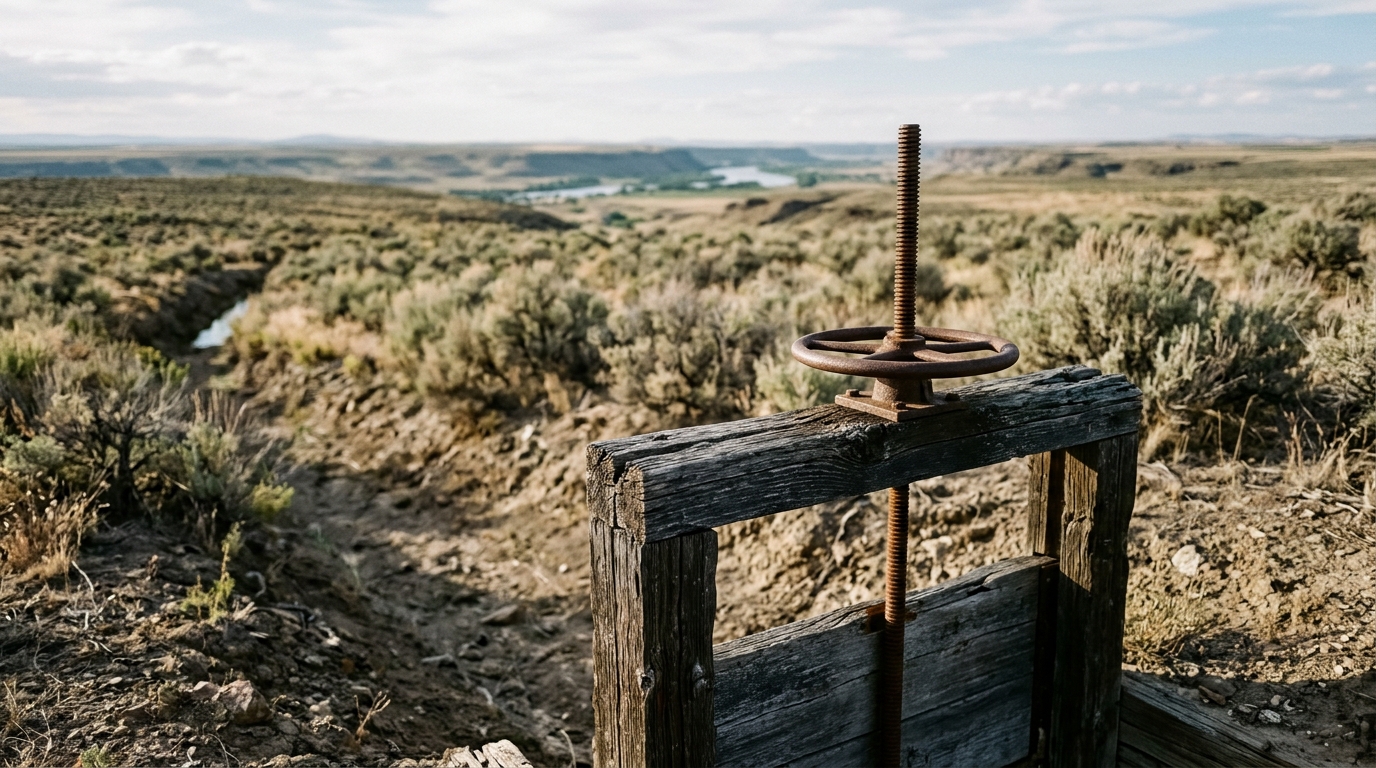
Selling an Idaho Property with Water Rights: What Transfers with the Deed and What Doesn’t
If your Idaho property comes with water rights, the question most sellers ask first is whether those rights go with the house when you sell. In most cases they do, automatically, but three specific situations cause them to fall out of a closing without warning, and any one of them can delay a transaction or create a title problem the buyer inherits.
Idaho runs on prior appropriation, not riparian rights
Most of the eastern United States grants water rights based on proximity to a stream. A landowner whose property touches a watercourse has the right to use it. Idaho does not work that way. Idaho’s constitution established prior appropriation as the governing doctrine: the right to divert and use water belongs to whoever first put it to beneficial use, regardless of whether their land touches the water source. First in time, first in right.
That distinction matters when you sell because Idaho water rights are legal property rights administered by the Idaho Department of Water Resources (IDWR). They are not informal arrangements. They carry a priority date, a permitted quantity in cubic feet per second or acre-feet per year, a designated place of use, and a designated purpose. A water right for 1.2 cubic feet per second for irrigation on 40 acres in Canyon County is a specific legal instrument. It is worth something, and its status affects whether a buyer’s lender will fund the purchase.
What “appurtenant” means and why it matters at closing
Idaho Code 42-220 says water rights confirmed by permit, license, or court decree “shall become appurtenant to, and shall pass with a conveyance of, the land.” Appurtenant means the right is attached to a specific parcel, not to the person who owns it. When you deed the land, the water right goes with it automatically, without a separate instrument.
For most rural Idaho properties with active irrigation rights, that is the whole story. The seller does nothing special to move the water right to the buyer. The deed conveys it. The title company notes the water right in the closing documents, and the buyer files a change-of-ownership notice with IDWR after the sale. A cash close on a property with clean, appurtenant, actively-used water rights can proceed in 7 to 14 days, the same as any other Idaho property.
Three situations where water rights don’t transfer
The automatic transfer rule has real limits. Water rights fall out of a closing in three distinct ways.
The seller retained the right in a prior deed. A previous owner could have sold the land while explicitly carving out the water right. This happens on agricultural splits where a farmer sells off a parcel but keeps the water allocation for the remaining acreage. If the chain of title shows a deed that reserves the water right, the buyer doesn’t receive it, and neither do you as the current seller unless that reservation was later released. A thorough title search will find this, but only if the title company examines the full chain rather than relying on the most recent deed.
The right was forfeited through non-use. Under Idaho Code 42-222, any water right not put to beneficial use for five consecutive years is subject to forfeiture. The burden of proving forfeiture falls on whoever claims it, and the required standard is clear and convincing evidence. If your property sat vacant for several years, or if a prior owner stopped farming the land, a buyer’s due diligence could raise a forfeiture question. Idaho Code 42-223 provides exceptions: rights placed in the state water supply bank, rights held in an irrigation district, rights where non-use resulted from uncontrollable circumstances. But any gap in use creates a cloud on title that a financed buyer’s lender will not ignore. If your property has been vacant for several years, see our guide on selling vacant Idaho property for the full picture of what that creates at closing.
What you have is canal company shares, not an IDWR water right. Across southern Idaho, many rural and semi-rural properties receive irrigation water through a mutual irrigation company rather than through an individual IDWR permit on the parcel. The Nampa and Meridian Irrigation District, the Settlers Irrigation District, and dozens of similar entities across the Treasure Valley, Magic Valley, and Eastern Idaho deliver water to members holding shares in the cooperative. Those shares are personal property stock certificates, not real property, and they do not automatically pass with a deed. They require a separate written assignment from seller to buyer. A sale that overlooks this step leaves the buyer without water delivery even though the land transferred clean.

The SRBA and what a decreed right means for your closing
Idaho completed the Snake River Basin Adjudication (SRBA), a general stream adjudication that resolved water right claims across the Snake River Basin, covering most of southern and eastern Idaho. Rights that went through the SRBA carry a court decree, the strongest form of water right documentation available. A decreed right shows up in title searches with its priority date and permitted quantity in the court record, and a buyer’s lender or attorney can verify it without tracking down original permit applications at IDWR.
If your property is in northern Idaho or a basin outside the SRBA’s scope, your water right may be permitted but not decreed. The documentation differs, but the right still transfers under IC 42-220. The practical difference is how long a buyer’s review takes. A SRBA decree is self-contained. A pre-adjudication permit may require pulling original files from IDWR records in Boise.
What the new owner must do after closing
Even when a water right transfers cleanly with the deed, the buyer has a statutory obligation under Idaho Code 42-248 to notify IDWR of the change in ownership within 120 days of the conveyance. The filing fee is $25 per water right, or $100 if the right is divided among multiple parties. IDWR’s records update is not a legal determination of ownership, the statute says so plainly, but it keeps the new owner on the mailing list for curtailment orders and other notices that can affect how much water they receive during drought years.
Sellers who want a clean handoff will mention this obligation in the closing documents. A buyer who misses the 120-day window won’t lose the right, but they may miss a curtailment notice affecting their growing season.
What lenders require and where financed closings slow down
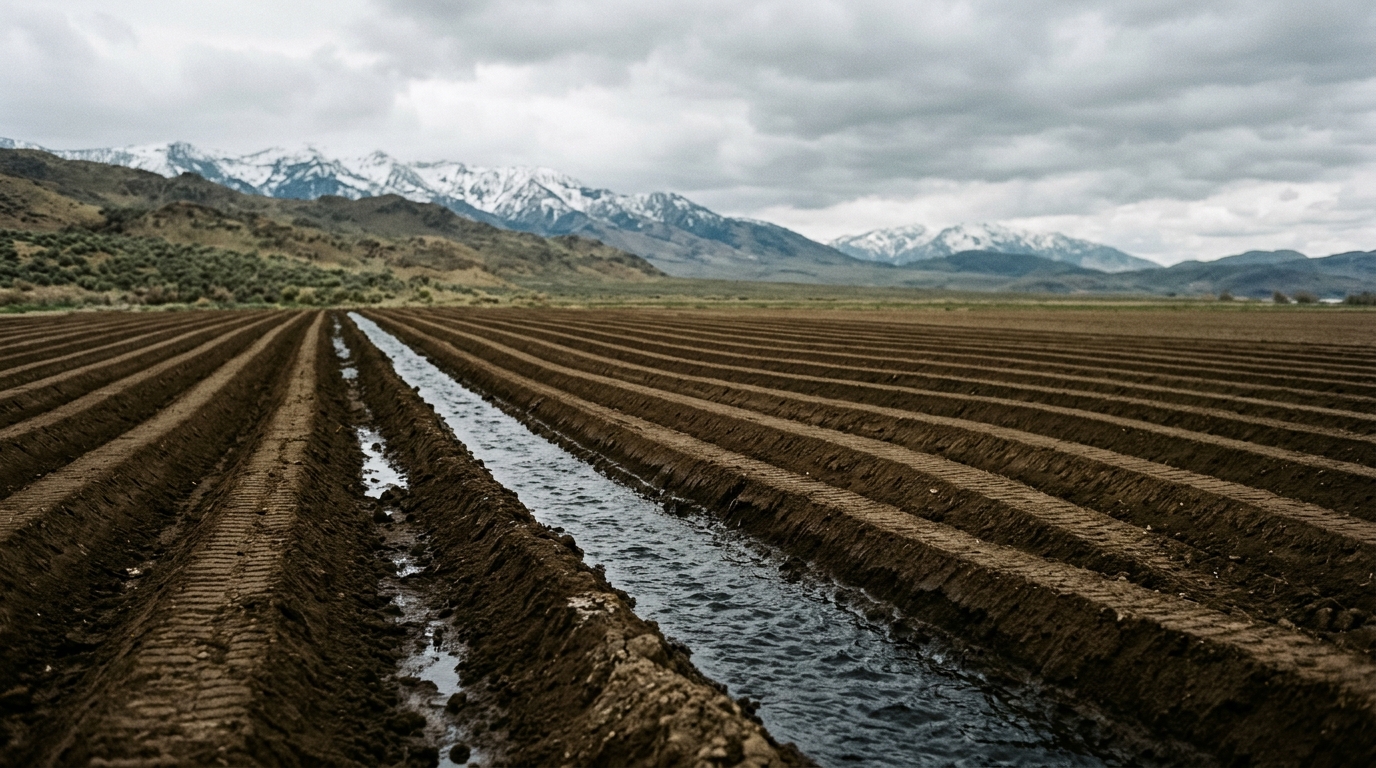
A financed sale on a rural Idaho property with water rights adds steps that a Boise subdivision purchase doesn’t have. The buyer’s lender will typically require a water rights examination by a licensed Idaho attorney or a water rights consultant. That review confirms the right is appurtenant to the specific parcel, is not subject to an active forfeiture claim, has not been pledged as collateral on another debt, and has a permitted volume consistent with the property’s actual use.
That process adds time. A rural property with a straightforward SRBA decreed right and a clean title chain might add one to two weeks. A property with a gap in the title history, a canal company share that hasn’t been formally assigned through prior sales, or a right showing potential non-use can add four to six weeks, and some lenders will require the issue resolved before they fund at all.
A cash buyer does not require a lender water rights examination. The buyer may still commission their own review, and any serious buyer of rural Idaho acreage will want to understand what they’re purchasing, but there is no underwriting file waiting on the results.
A Canyon County example: acreage with irrigation district shares
A seller in Notus owns 8 acres with a house, a shop, and water delivery through the Nampa and Meridian Irrigation District. The property has been on the market for 55 days. Two offers came in, both financed. The first buyer’s lender required a water rights examination and confirmation that the canal company shares were properly assigned through each prior ownership. The examination found the shares still listed in a prior owner’s name on the irrigation district’s stock register, not in the current seller’s name. Correcting that required a written assignment from the estate of the prior owner, which took three weeks to produce through the probate attorney.
A cash buyer stepped in, reviewed the same documentation independently, agreed to take the corrective assignment as a closing condition, and closed in 12 days from contract. The seller moved to Nevada on their planned date.
This scenario repeats across Canyon County, Twin Falls County, Bingham County, and the Magic Valley, wherever irrigation delivery runs through a mutual company rather than directly through an IDWR permit tied to the parcel. For more on the Canyon County market, see our Nampa seller page.
Who should not sell for cash in this situation
If your rural Idaho property has clean water rights documentation, no forfeiture risk, and a buyer pool willing to wait on a financed close, a traditional sale on the open market will almost certainly net you more than a cash offer. Cash buyers price for uncertainty and carry cost. A property with a clear SRBA decreed right, an unbroken title chain, and no canal company share complications does not carry much uncertainty, and a conventional buyer will pay for that clarity.
Cash makes the most sense when the title history is complicated, when the property has been vacant long enough to raise a forfeiture question, when canal company shares have not been properly assigned through every prior sale, or when the seller is under time pressure that a 60-to-90-day retail timeline cannot accommodate. It also makes sense if the property’s water rights are modest and not a major driver of value, and the seller simply wants a predictable, fast close without a lender-driven review process.
For complex water rights situations, consult an Idaho attorney before listing. IC 42-248 creates a post-closing obligation for the buyer, but what you own and what transfers is on the seller to clarify before the property goes on the market.
Common Questions
Do water rights automatically transfer when you sell a house in Idaho?
If the water right is appurtenant to the land, yes. Idaho Code 42-220 says confirmed water rights pass with a conveyance of the land without requiring a separate transfer instrument. The exception is canal company shares, which are stock in an irrigation cooperative, treated as personal property, and require a written assignment from seller to buyer separate from the deed.
Can a seller in Idaho keep their water rights and sell the land separately?
Yes. A seller can retain an appurtenant water right by explicitly reserving it in the deed. The right then becomes a separate property interest detached from the parcel. Whether the retained right can actually be put to beneficial use without the associated land depends on the right’s designated place of use, and that is a question for a water rights attorney before the deed is drafted.
What happens to a water right if a property has been vacant for several years?
Idaho Code 42-222 allows forfeiture after five consecutive years of non-use, subject to clear and convincing proof from whoever claims the forfeiture occurred. If your property sat unirrigated for more than five years, a buyer’s lender or attorney may raise the question. Idaho Code 42-223 lists exceptions, including rights where non-use resulted from circumstances outside the owner’s control. Get an attorney’s written opinion before selling a long-vacant Idaho property with water rights.
What is the 120-day IDWR notification requirement after buying property with water rights?
Idaho Code 42-248 requires the new owner to file a change-of-ownership notice with the Idaho Department of Water Resources within 120 days of the conveyance, along with a $25 filing fee per water right. Missing this window does not extinguish the right, but it removes the new owner from IDWR’s mailing list for curtailment orders and legal notices affecting the right during drought curtailments.
If you are selling a rural Idaho property and want to understand how water rights affect your timeline and net proceeds, call (208) 540-8257 or request an offer at sellmyhousefastid.com/get-a-cash-offer. We buy properties with complicated water rights history in Canyon County, Ada County, Twin Falls County, Bingham County, and across Idaho.