
Selling a House with Mold in Idaho: What IC 55-2508 Requires and When a Cash Sale Changes the Math
You can sell a house with mold in Idaho. What it costs you depends on two things: what state law requires you to tell buyers, and whether a lender will fund the transaction. The first question is answered by Idaho Code 55-2508. The second, by the lender’s appraiser, and that is usually where the deal falls apart.
What Idaho Disclosure Law Actually Asks About Mold
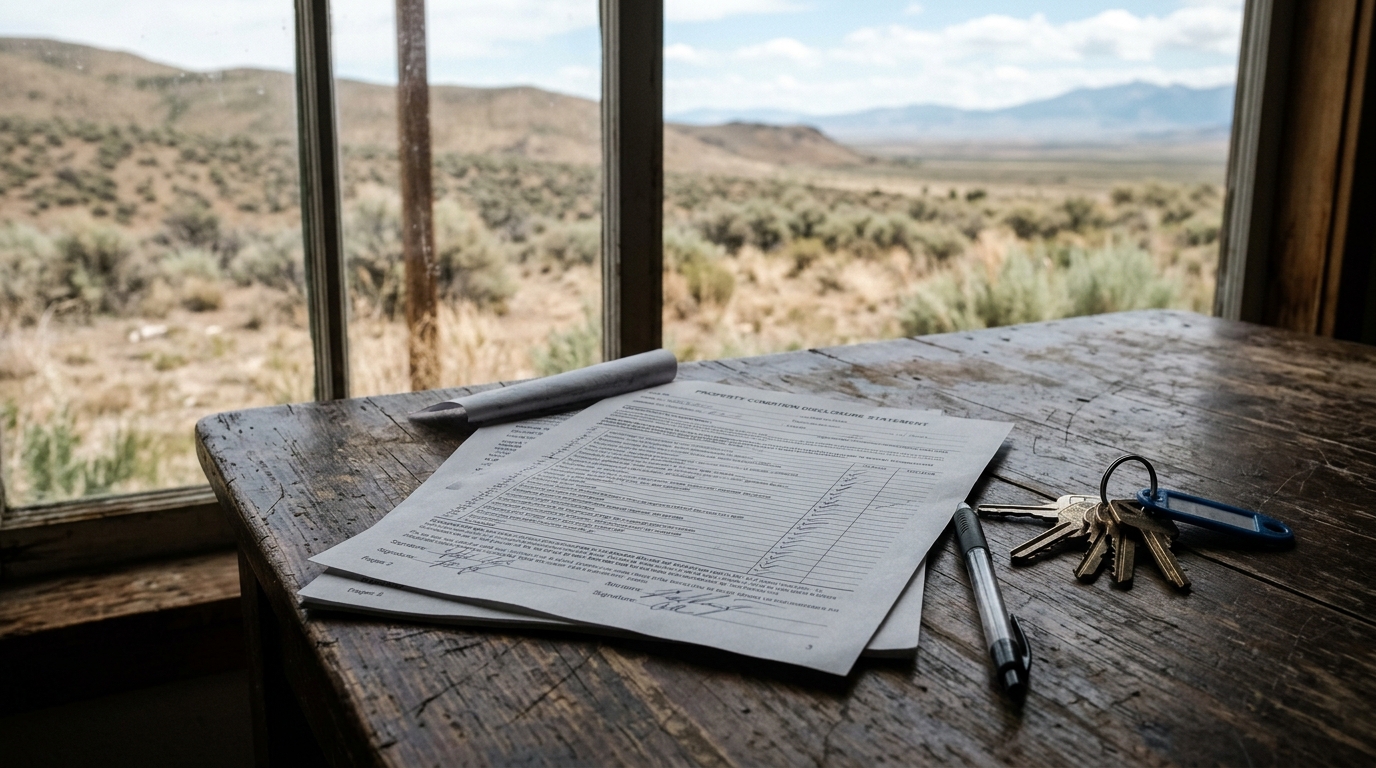
Idaho’s Property Condition Disclosure Act requires sellers to complete a disclosure form before transferring residential real property. Idaho Code 55-2508 sets out what the form covers. One of its eight categories asks: “Are you aware of any hazardous materials or pest infestations on the property?” Mold falls under that question.
The standard is awareness, not omniscience. If you do not know there is mold, you have nothing to disclose. If you know and say nothing, you are exposed to a misrepresentation claim that is not capped by the disclosure statute.
The form also asks separately about basement water intrusion and structural defects. Mold that follows a basement leak or a roof failure may need to be disclosed under multiple categories, depending on what you know.
Some Idaho sellers are exempt from the disclosure requirement entirely. Idaho Code 55-2505 lists 16 exemptions. If you inherited the property and never lived in it, you are exempt. If the transfer is a court-ordered sale, an estate administration, or a foreclosure, the disclosure requirement does not apply. A cash buyer purchasing from a non-occupant heir has no disclosure form in the transaction at all.
The Three-Day Rescission Window After Disclosure
Once you give a buyer the completed disclosure form, Idaho Code 55-2515 gives them three business days to walk away without penalty. The rescission must be in writing, signed, and dated. It must identify the specific disclosure item the buyer objects to. If those three days pass without a written rescission, the right is waived.
In practice, the mold question on the disclosure form is rarely what triggers rescission. The more common sequence: seller discloses mold, buyer’s inspector confirms it and writes up a report, buyer uses the inspection contingency to renegotiate or cancel. The disclosure statute and the inspection contingency are separate mechanisms. Only the disclosure rescission has the three-day window and the no-fault cancellation protection.
Why Active Mold Kills Most Financed Deals
Disclosure gets the conversation started. The lender ends it.
FHA loans require appraisers to flag conditions that make a property “not safe, sound, or sanitary.” Visible mold meets that standard. The appraisal report will note the condition and the loan will not fund until the borrower provides documentation of remediation. VA loans apply the same minimum property requirements. Conventional loans funded through Fannie Mae guidelines give individual lenders discretion, but most underwriters require remediation documentation if the appraiser notes active mold.
This is the real mechanism. A buyer willing to accept mold and a price reduction cannot save a financed deal when the appraisal report blocks it. The remediation has to happen before the loan closes. That means you are either paying for it, crediting the buyer to pay for it and hoping the lender accepts an escrow holdback, or losing the buyer.
Where Mold Shows Up in Treasure Valley Homes
Idaho is high desert, and mold thrives in moisture. The two are not contradictory.
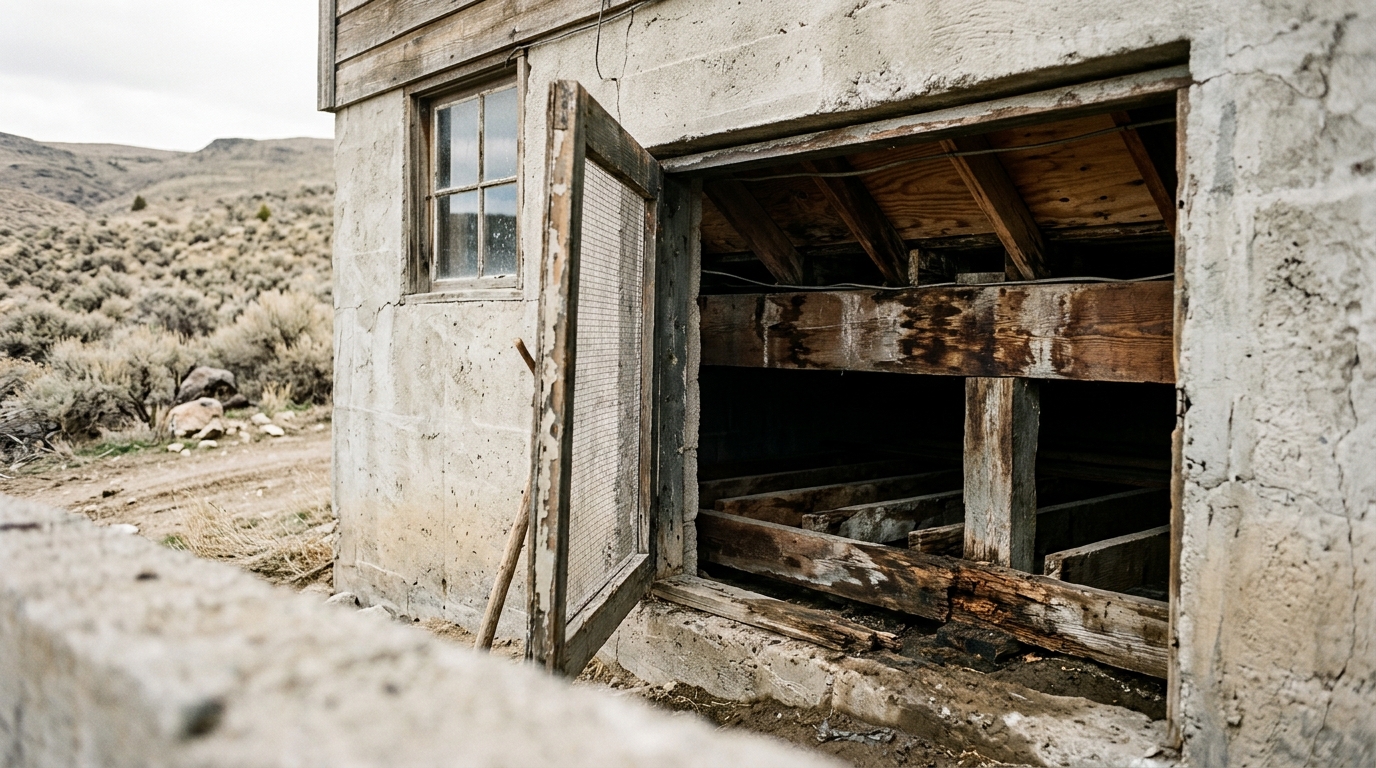
Crawl space mold is the most common problem in Ada and Canyon County. Homes built in the 1950s through 1980s, particularly in older Boise neighborhoods and established Nampa subdivisions, went in with minimal vapor barriers over bare dirt. The Snake River irrigation system raises the groundwater table seasonally. During irrigation season from April through October, that moisture migrates up through unprotected crawl spaces and feeds mold growth on floor joists and subfloor sheathing.
Attic mold runs second. Cold Idaho winters and inadequate attic ventilation trap condensation against the roof deck. The mold colony does not appear until a buyer’s inspector pulls back the insulation.
Basement finishing projects from the 1990s and early 2000s are the third common source. Drywall was installed directly against concrete foundation walls without a moisture break. The wall stayed damp, the paper facing fed the mold, and the finished surface hid it for years.
Your Options When You Need to Sell
Three realistic paths exist. Each has a different cost and timeline.
Remediate before listing. Hire a qualified Idaho mold remediation contractor to address the problem and provide documentation. For a typical Ada or Canyon County crawl space or attic treatment, contractors generally quote $1,500 to $4,000 depending on affected area and whether structural material needs to be replaced. After remediation, you get written documentation, the disclosure form reflects the completed work, and lenders fund normally. The tradeoff is weeks of delay and out-of-pocket cost before you have a buyer.
Disclose, price it in, and find a financed buyer. This works in theory. In practice, the lender’s appraisal requirement breaks it. Unless you are willing to escrow funds for remediation, the lender will not close. Escrow holdbacks for health conditions are not guaranteed approvals, and many lenders decline them.
Sell to a cash buyer. A cash buyer has no lender appraiser. The mold condition does not trigger a funding block. You disclose what you know, the buyer factors the remediation cost into the offer, and the sale proceeds. The offer will reflect the cost of the problem. The tradeoff is accepting that reduction rather than fixing the property yourself and listing retail.
Traditional Listing vs. Cash Sale: The Numbers on a Nampa Property
| Factor | Traditional Listing | Cash Sale |
|---|---|---|
| Lender appraisal required | Yes | No |
| Mold remediation before close | Required for financing | Not required |
| Out-of-pocket remediation cost | $1,500 to $4,000+ | $0 |
| Days on market plus close | 60 to 90+ days | 7 to 14 days |
| Realtor commission | Typically 2.5% to 3% | None |
| Risk of deal falling through | High if mold found at appraisal | Low |
On a $320,000 Nampa house with crawl space mold, the traditional path might look like this: $3,000 remediation up front, $9,600 commission at 3%, $5,000 in closing cost credits to the buyer, plus 75 days of carrying costs at roughly $1,900 per month in principal, interest, taxes, and insurance. Net proceeds near $300,000 if everything works. The cash path comes in lower on the offer price but puts money in hand in two weeks with none of those deductions. Whether the retail premium is worth the difference depends on your timeline, the extent of the mold, and how well the rest of the house shows.

Who Should Not Sell for Cash
A cash sale is the wrong move in several situations.
If the mold is surface growth on bathroom caulk or tile grout, remediate it yourself. The cost is $500 or less. Accepting a $20,000 discount on a cash offer for a problem you can fix on a weekend does not make financial sense.
If you have strong equity and time, remediation plus a retail listing will net more than a discounted cash offer in most Treasure Valley markets. The calculus shifts when the mold is extensive, when you need to close fast, or when your equity cushion is thin and cannot absorb months of carrying costs while you wait for a financed buyer.
If you are exempt from disclosure because you inherited the property and never occupied it, a cash buyer should still understand what they are buying before close. The disclosure exemption protects your legal obligation, not the deal’s integrity. A buyer who discovers significant mold after an as-is cash closing has limited recourse, but the transaction runs cleaner for everyone when known conditions are disclosed upfront.
Check with an Idaho attorney if the mold is severe, if you have concerns about what was known at the time you purchased the property, or if prior non-disclosure by a previous owner is a factor.
Common Questions
Is Idaho a disclosure state for mold?
Idaho is a disclosure state for known material defects. Idaho Code 55-2508 requires sellers to answer whether they are aware of any hazardous materials on the property. Mold falls under that question. There is no separate Idaho mold statute for residential real estate, but the general disclosure requirement covers it when you have knowledge of the condition.
What if I did not know the mold was there?
The disclosure obligation applies only to conditions you are aware of. If mold was hidden in a crawl space and you had no reason to know, there is nothing to disclose. If a buyer’s inspector finds it, the buyer’s inspection contingency governs what happens next, not the disclosure statute.
Can I sell a house with mold without fixing it?
Yes. Remediation is a lender requirement, not a legal one. If your buyer is paying cash, no lender appraiser can block the transaction. You disclose the condition, the buyer prices it in, and the sale closes on a normal timeline. If your buyer is financing, the lender will require documented remediation before funding.
How much does mold remediation cost in Idaho?
Estimates vary depending on the affected area, accessibility, and whether structural material needs to be replaced. For crawl space or attic surface treatment in Ada or Canyon County, contractors generally quote $1,500 to $4,000. Larger infestations affecting framing or requiring full encapsulation run higher. Get at least two written estimates before deciding between remediation and a cash sale.
If mold is limiting your options on an Idaho property, call us at (208) 540-8257 or visit our cash offer page. We buy Idaho houses as-is, including those with mold, and can typically close in 7 to 14 days on your schedule. See how our process works for Nampa homeowners and across the Treasure Valley, or read more about what Idaho disclosure law requires when selling as-is.